.svg)


What Canadian Employers Expect From a Resume
There is no universal layout used by every Canadian employer. The reliable principle is relevance: the document should help a recruiter connect your evidence to the job requirements quickly. Canada’s Job Bank resume guidance recommends presenting qualifications clearly and concisely, tailoring the resume to the position, highlighting accomplishments and using plain language and action verbs.
Clear, concise and tailored information
Start with the posting. Identify the responsibilities, required skills, tools, credentials and language expectations, then prioritize matching evidence. A generic resume makes the employer do the interpretation; a tailored resume makes the connection visible. Researching the organization and role before writing is also part of the application process recommended by Job Bank’s job application guide.
Evidence of skills and achievements
A list of duties says what the position involved. An achievement says how you performed. Where accurate, show scale, frequency, time, quality, revenue, cost, volume, customer impact or process improvement. Never invent a number. If you do not have a reliable metric, use concrete scope instead: the stakeholders you supported, the system you implemented, the problem you solved or the complexity you handled.
Easy scanning for recruiters and hiring managers
Use recognizable headings, short paragraphs and focused bullets. Put the most relevant information where it will be seen early, and keep dates and job details consistent. Job Bank advises limiting bullets within a section or subsection and keeping each point relevant and concise.
The Recommended Canadian Resume Structure
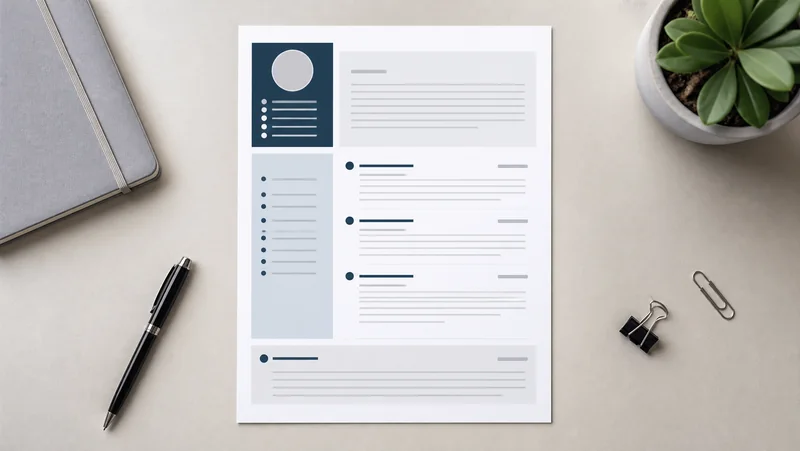
The following structure works for many non-academic applications, but it is a starting point rather than a mandatory template. Change the order when the role, your career stage or the employer’s instructions justify it.
| Section | What to include | What to avoid |
| Contact Information | Name, city and province, professional email, phone number, and a relevant LinkedIn or portfolio URL | SIN, birth date, photo, full street address when unnecessary, or unrelated social profiles |
| Professional Summary | Two to four lines connecting your experience, strengths and target role | A generic objective, unsupported superlatives, or immigration history that is not relevant to the application |
| Key Skills | Job-relevant technical, language and transferable skills you can support with evidence | Long keyword lists, basic traits without proof, or skills you cannot demonstrate |
| Work Experience | Employer, location, translated job title, dates, scope and achievement-focused bullets | Only duties, unexplained local acronyms, reasons for leaving, or fabricated results |
| Education and Credentials | Degree or credential, institution, location, completion date when useful, and relevant Canadian recognition or licence status | Claiming Canadian equivalency or professional authorization that has not been formally established |
| Optional Sections | Projects, certifications, volunteer work, publications or languages when relevant | Hobbies or personal details that do not strengthen your fit for the role |
Contact Information
Place your name and reliable contact details at the top. A city and province are usually enough to communicate location; whether to include a full street address depends on the application. Use a professional email address and check that every link works. Do not put your Social Insurance Number (SIN) on a resume.
Professional Summary
Write a short, targeted snapshot rather than a life story. Name the kind of professional you are, your most relevant area of experience, one or two strengths and the value you can bring. A newcomer can mention international scope when it adds context, but does not need to apologize for having no Canadian work history.
Key Skills
Select skills from the job requirements that you genuinely possess. Include specific tools, methods, industry knowledge and language capability where relevant. Transferable skills such as stakeholder communication or process improvement become more credible when the experience section shows where you used them.
Work Experience
Reverse chronological order is a common and practical choice: begin with the most recent role. For each position, show the employer, location, title and dates, followed by concise achievement-focused bullets. Use a translated or clarified title when necessary, but keep it honest and proportionate to the original role.
Education and Credentials
List the credential, institution and location. Add a completed credential assessment or licence only when accurate, and distinguish an educational assessment from authorization to practise. In a regulated profession or compulsory trade, recognition and licensing requirements depend on the occupation and province or territory; the Government of Canada’s foreign credential recognition guidance directs applicants to the relevant regulatory body.
Optional Sections
Projects, volunteer work, certifications, professional development and languages can strengthen the resume when they support the target role. Job Bank specifically notes that relevant unpaid work may demonstrate skills. Do not add a section merely because a template contains it.
How Long Should a Canadian Resume Be?
Job Bank recommends limiting a resume to two pages and emphasizing recent experience; it also suggests cutting or minimizing experience older than 15 years. Treat this as official federal guidance, not a law or an absolute rule for every employer. A student, recent graduate or early-career applicant may be able to present relevant evidence on one page. An experienced professional may need two pages to show the right scope and achievements without crowding.
Do not reduce the font to an uncomfortable size simply to reach one page. Remove repetition, older detail and low-relevance content first. Academic, research and some specialized applications may request a curriculum vitae (CV) with a different length and structure, so the posting remains the controlling instruction.
How to Present International Experience to Canadian Employers
International experience is professional evidence. The goal is to reduce the context a reader must guess. Use clear language, explain unfamiliar details briefly and show how your results relate to the Canadian role. The IRCC job-search guidance for newcomers points to immigrant-serving organizations that offer resume workshops and job-search training, as well as bridging programs for internationally trained professionals and tradespeople.
Translate job titles for clarity, not status
Translate a Persian or other non-English title into the closest plain-English description of the actual work. If the literal title could mislead a Canadian reader, use a clarifier in parentheses. Do not inflate seniority: a title that sounds more prestigious but changes the level or scope of the role undermines trust.
Explain unfamiliar companies briefly
After the employer name, add a short neutral descriptor when useful, such as “regional food manufacturer” or “business-to-business software provider.” One phrase can supply the industry and scale that a Canadian employer would otherwise recognize from a familiar company name.
Turn responsibilities into measurable achievements
The examples below are fictional. They show the difference between a duty and evidence of performance; use only facts you can support.
- Before: Responsible for monthly reports. After: Consolidated monthly sales reporting for four regional teams and reduced preparation time from five days to two by standardizing the spreadsheet workflow.
- Before: Managed customer service. After: Supervised an eight-person customer support team serving approximately 1,200 monthly inquiries and introduced response templates that improved consistency across email and chat.
- Before: Worked on procurement projects. After: Coordinated supplier comparisons and contract documentation for 30 recurring purchase categories, helping the operations team identify annual cost reductions of 8%.
Show transferable skills
Make the underlying capability visible: working across functions, resolving client problems, interpreting technical information, training colleagues or improving a process. Connect it to the vacancy through similar tasks and outcomes. “No Canadian experience” does not mean “no relevant experience”; it means the evidence may need clearer framing.
Handle regulated occupations carefully
Do not imply that a foreign licence automatically authorizes you to use a protected title or practise in Canada. State the credential and current recognition status accurately—for example, “licensure assessment in progress”—only if true. Requirements vary by occupation and jurisdiction, and the regulator for the province or territory is the authoritative source. IRCC also explains that bridging programs may support licensing, training and workplace integration.

Personal Information to Leave Off a Canadian Resume
Job Bank advises leaving out unnecessary personal details such as age, weight, height, marital status, religious preference and political views. It also says never to include a Social Insurance Number and notes that a photo is not the norm in Canada. These are resume and privacy recommendations; they should not be misrepresented as a blanket statement that every item is illegal in every context.
Keep the focus on job-related qualifications. Leave off a photograph unless a legitimate, role-specific instruction clearly requires one; omit birth date, family status, religion, political affiliation and unrelated identity documents. Job Bank’s job-search safety guidance also warns applicants not to provide sensitive details such as a SIN, birth date, driver’s licence number, health card number or banking information in a resume or interview.
Canadian Resume Formatting Checklist
Layout and typography
- Use a readable professional font and consistent heading sizes.
- Keep margins and white space comfortable; avoid crowded multi-column designs unless the employer or field makes them appropriate.
- Use consistent bullets and clear section headings.
- Reserve colour and visual elements for restrained emphasis.
Dates and consistency
Choose one date style—such as “Jan 2024–Mar 2026” or “2024–2026”—and use it throughout. Align job titles, employer names, locations and dates consistently. Explain a career gap only when doing so adds useful, relevant context; do not invent activity to fill it.
File name and file format
Use a clear file name such as FirstName-LastName-Resume.pdf. PDF often preserves layout, while Word may be requested for editing or an application system. Neither format is always correct. Follow the posting and upload portal first, and test the final file before sending.
Proofreading and final checks
Check spelling, grammar, dates, links and contact details. Ask another person to review the document if possible. Read every bullet against the posting: if a line does not demonstrate relevant value, revise it or remove it.
Canadian Resume Example for a Newcomer
Fictional example: The person, employer and details below are invented for illustration.
Leila Rahimi — Operations Coordinator
Calgary, Alberta | sample.email@example.com | 000-000-0000 | LinkedIn/portfolio placeholder
Summary: Operations coordinator with five years of experience supporting procurement, reporting and cross-functional projects for a regional manufacturing business. Skilled in Excel-based analysis, vendor coordination and process documentation. Brings clear communication and experience working with technical and commercial teams.
Skills: Operations coordination; Microsoft Excel; procurement documentation; vendor communication; process improvement; English and Persian.
Experience:
Operations Coordinator (translated title) | Arman Industrial Group, Tehran, Iran | 2021–2026
- Coordinated purchase documentation and status tracking for more than 25 recurring material categories across operations and finance.
- Standardized a weekly order report, reducing preparation time by approximately six hours per month.
- Prepared bilingual supplier correspondence and maintained action logs for cross-functional meetings.
Education: Bachelor of Industrial Engineering | Fictional University, Tehran, Iran | 2020
Common Canadian Resume Mistakes
- Sending the same version everywhere: Reorder and rewrite evidence for the specific posting.
- Using a translated title that inflates seniority: Clarify the work without changing its level.
- Assuming the company name explains the context: Add a brief industry descriptor when the employer is unfamiliar.
- Using Canadian jargon incorrectly: Prefer accurate plain language over borrowed terms you cannot explain.
- Listing every job in equal detail: Give the most space to recent, relevant evidence.
- Claiming credential equivalency too broadly: Name the assessment or licence status precisely.
- Hiding useful volunteer or project work: Include it when it proves a required skill.
- Using weak file names: Replace “resume-final-new2” with a professional, identifiable file name.
- Leaving links untested: Confirm that LinkedIn and portfolio links open and show current content.
- Writing unsupported achievements: Use numbers only when they are accurate and defensible.

A final review should confirm relevance, accuracy, readability and application instructions. Final Canadian Resume Checklist
☐ The resume is tailored to one specific role.
☐ Contact details are accurate and professional.
☐ The opening summary matches the target position.
☐ Key skills are supported by evidence elsewhere in the resume.
☐ International job titles are translated clearly and honestly.
☐ Unfamiliar employers have brief, useful context.
☐ Experience bullets focus on achievements, scope or outcomes.
☐ All numbers and claims can be supported.
☐ Education, assessments and licence status are described accurately.
☐ Unnecessary personal and sensitive information is removed.
☐ Dates, punctuation, headings and bullet styles are consistent.
☐ The document is no longer than needed and remains easy to read.
☐ Spelling, grammar, links and file name have been checked.
☐ The selected file format follows the employer’s instructions.
☐ A trusted reviewer has checked the final version where possible.
When a Professional Resume Review May Help
Outside feedback can be useful when you are changing industries, translating senior international experience, returning after a gap, applying in a regulated field or receiving little response despite applying to well-matched roles. A reviewer can identify unclear context, weak evidence and mismatches between the posting and your resume; they cannot guarantee interviews or employment.
Coachilo’s Career Path & Resume Coaching category can help you explore relevant support. You can also browse Coachilo’s list of coaches, review broader Career & Business Coaching options or check current first-session-free availability.
RESUME GUIDANCE
Frequently Asked Questions
How long should a Canadian resume be?
Job Bank recommends limiting a resume to two pages and emphasizing recent experience. One page may be enough for a student, recent graduate or early-career applicant with focused evidence. Two pages may be more readable for an experienced professional. This is guidance, not a universal rule; follow the employer’s instructions and use the shortest length that presents relevant qualifications clearly.
Should I include a photo on my resume in Canada?
Usually no. Job Bank says a photo is not the norm in Canada and recommends keeping attention on skills and experience. Treat that as strong general resume guidance rather than a claim that photographs are prohibited in every situation. If a legitimate application gives role-specific instructions, assess those instructions carefully; otherwise, leave the photo off.
Is a CV the same as a resume in Canada?
Sometimes the terms are used interchangeably; IRCC, for example, describes a resume as also known as a curriculum vitae or CV in its general newcomer guidance. In academic and research settings, however, a CV may be a longer, more detailed record. The University of Toronto Mississauga Career Centre recommends treating academic applications as CV requests and non-academic applications as resume requests unless the employer says otherwise.
Should I include references on my resume?
Job Bank recommends keeping references on a separate sheet and providing them when requested. This preserves space for qualifications and allows you to brief references before an employer contacts them. Do not add “references available upon request” unless it serves a specific purpose; the space is usually more useful for relevant evidence.
How should I show work experience from Iran or another country?
Include it as professional experience. Translate the job title accurately, keep the original employer name, add a short industry descriptor if needed, and write achievement-focused bullets with truthful scope or results. Do not downgrade the experience simply because it was outside Canada, and do not claim licence equivalency that has not been established.
Should I send my resume as a PDF or Word document?
Use the format requested in the posting or application portal. PDF often preserves design and spacing; Word may be required by an employer, recruiter or upload system. If no format is specified, choose a clean, accessible file and test it before sending. Avoid an absolute rule because employer processes differ.